3D Printing in Construction

3D Printing in Construction

We build structures layer by layer, without formwork, using high-precision concrete. We are the company with the most advanced gantry-type 3D printer in Guatemala and one of the largest on the continent.

What is 3D printing in construction?

3D printing applied to construction, also known as additive manufacturing, is a technique for building structures layer by layer from precise digital models, without traditional formwork. It uses automated material-dosing systems and special concrete mixes, called “cementitious ink”, formulated to meet pumping and layer-adhesion requirements.

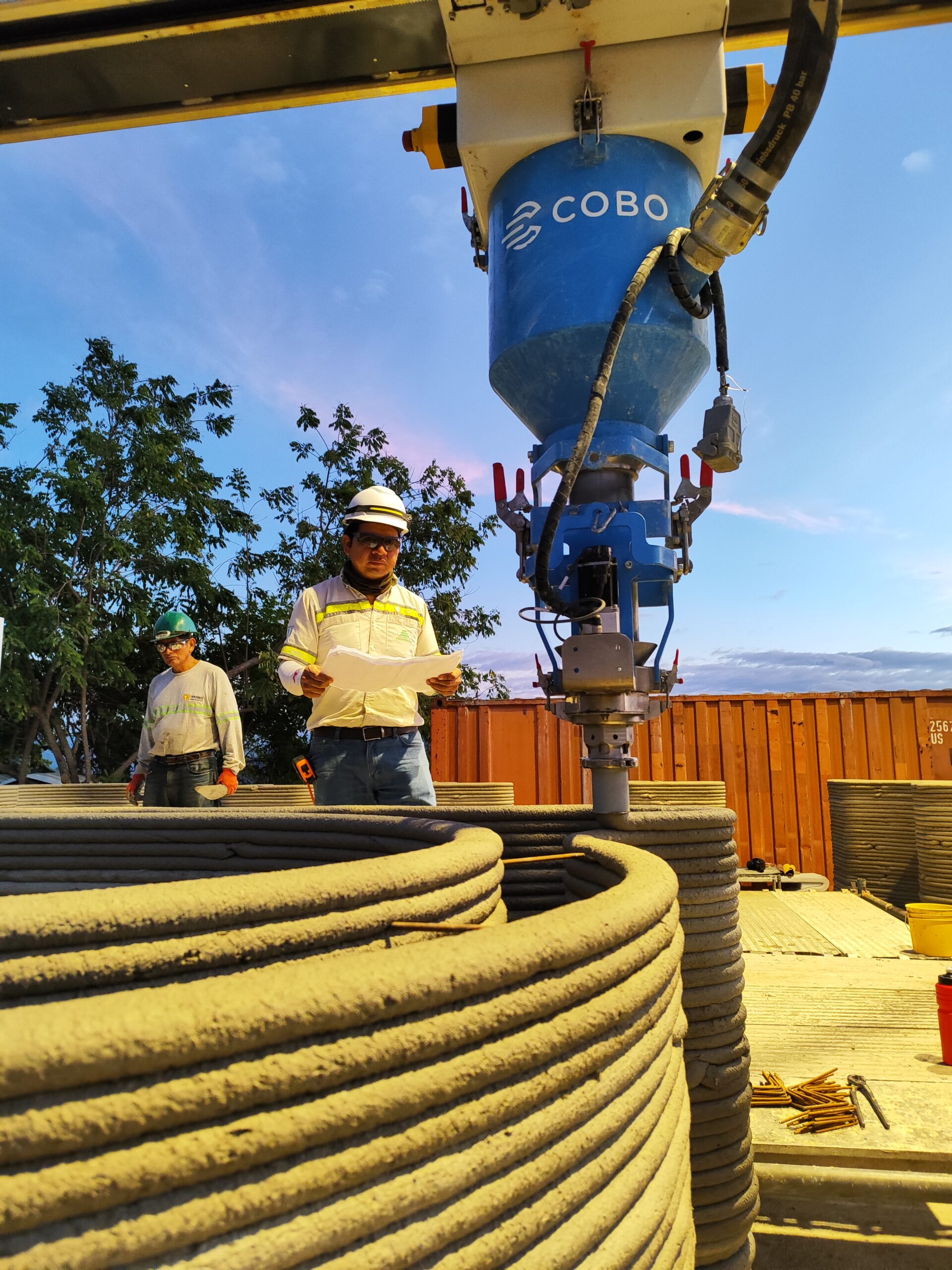
At Progreso we operate a COBOD BOD-2 gantry-type 3D printer, the first of its kind in Guatemala and one of the most advanced in Latin America.

Why is Progreso a benchmark in 3D construction printing?

Our Research and Development Center (CI+D) backs every project with a rigorous process of testing, mix validation and in-house know-how.

We have gone from experimental mini printers to building the largest printed building on the continent.

The largest 3D-printed structure in Latin America
508 m²
Effective printing time for the Pre-dosed Products Laboratory
154 hours
Continuous research and development at the CI+D
Since 2018
3D printing projects developed by Progreso

Housing module pre-prototype

2022 · 39 m²
A 39 m² basic housing module, the first residential application test of printed-concrete technology in Guatemala.

Project Alpha

2023 · 49 m²
Our first full-scale project, developed in collaboration with 3DCP Group (Denmark). A 49 m² multipurpose building that demonstrated the technical feasibility of additive manufacturing for functional construction in Guatemala.

Project Beta

2024 · 49 m²
A 49 m² corporate meeting room at the San Miguel Plant, designed and built entirely by the in-house CI+D team. Its curved geometry shows the design freedom this technology enables.

Pre-dosed Products Laboratory and Offices

2024–2025 · 508 m²
At 508 m², it is the largest 3D-printed structure in Latin America. Built entirely by Progreso teams with advice from 3DCP Group, it was completed in 154 hours of effective printing.

Our 3D printing journey: from 2018 to today

  • 2018 — PLA mini printer: first experimental test.
  • 2019 — Mini printer with cementitious material.
  • 2021 — Exploration to acquire an industrial printer.
  • 2022 — Purchase of the COBOD BOD-2 gantry-type printer. Housing module pre-prototype (39 m²).
  • 2023 — Project Alpha: multipurpose building (49 m²).
  • 2024 — Project Beta: corporate meeting room (49 m²). Pre-dosed Products Laboratory and Offices (508 m²).
  • 2025 — Exploration of structural typologies.
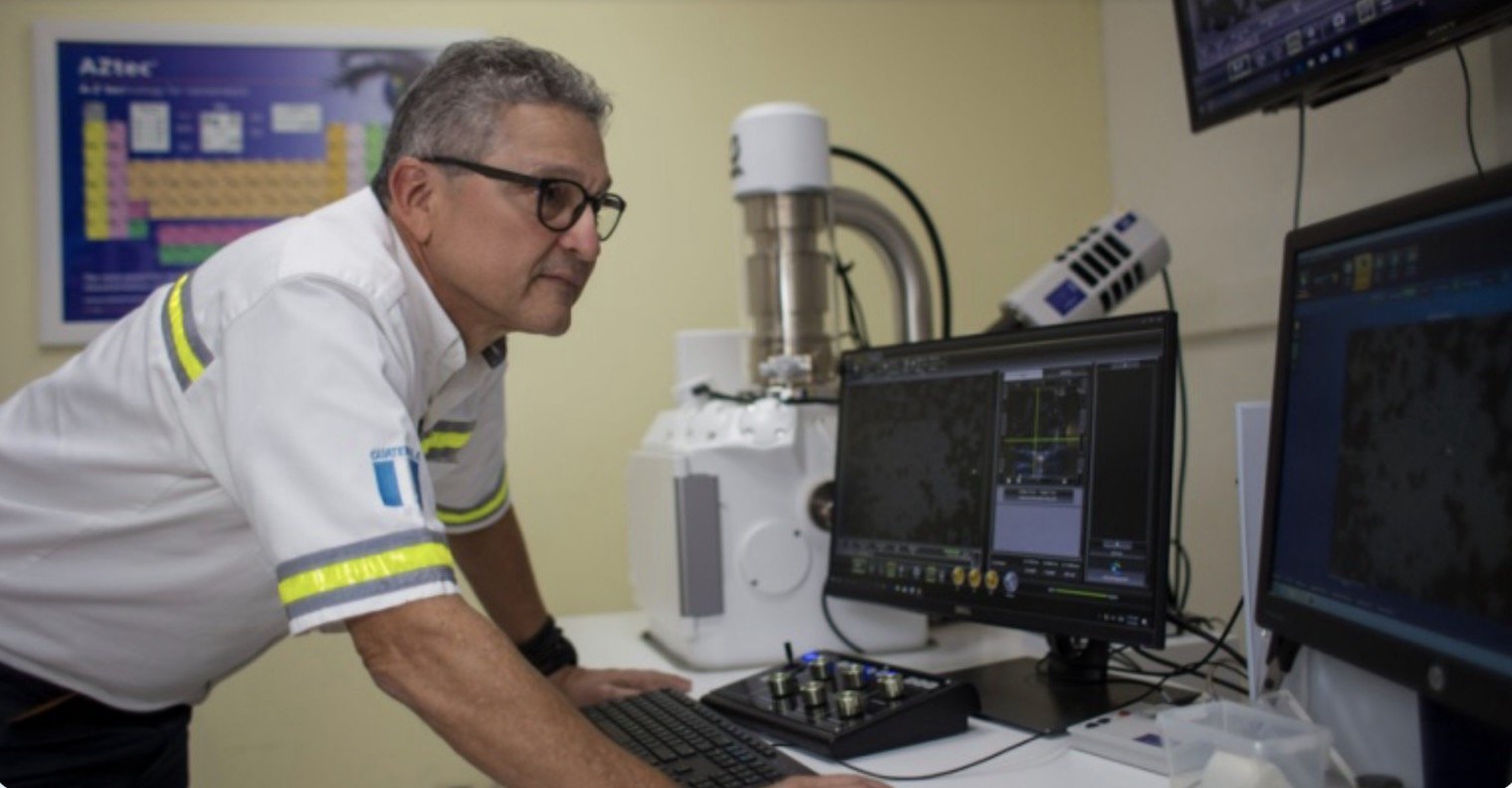
Progreso researcher analyzing materials at the Research and Development Center (CID) laboratory

3D printing as part of Progreso’s innovation ecosystem

3D printing is one of the most advanced expressions of Progreso’s commitment to construction innovation. Through Progreso X and the Research and Development Center (CI+D), we develop technologies that create economic, social and environmental value for the construction sector in Guatemala and Central America.

We work under the Progreso Innovation pillar, promoting strategic alliances —such as the one with 3DCP Group of Denmark— and applied research that transforms the way we build.

Frequently asked questions about 3D printing in construction

Special concrete mixes called “cementitious ink” are used, formulated to meet pumping fluidity and layer-to-layer adhesion requirements. Progreso’s R&D Center (CI+D) develops and validates these mixes in-house.

Progreso’s Pre-dosed Products Laboratory, the largest 3D-printed structure in Latin America at 508 m², was completed in 154 hours of effective printing, demonstrating the efficiency of this technology compared with traditional methods.

Yes. In 2022, Progreso developed a 39 m² basic housing module pre-prototype, exploring the housing possibilities of additive manufacturing with concrete in Guatemala.

It is a rail-mounted printing system that lets the extrusion head move along three axes (X, Y, Z) to deposit material in successive layers. Progreso operates COBOD’s BOD-2 model, the first printer of its kind in Guatemala.

Faster execution, less material waste, design freedom for complex geometries (such as curved surfaces), and less reliance on formwork and unskilled labor.

We use cookies to provide you with a better experience. By using this website, you agree to our Privacy Policy.